
AOGS Fellows
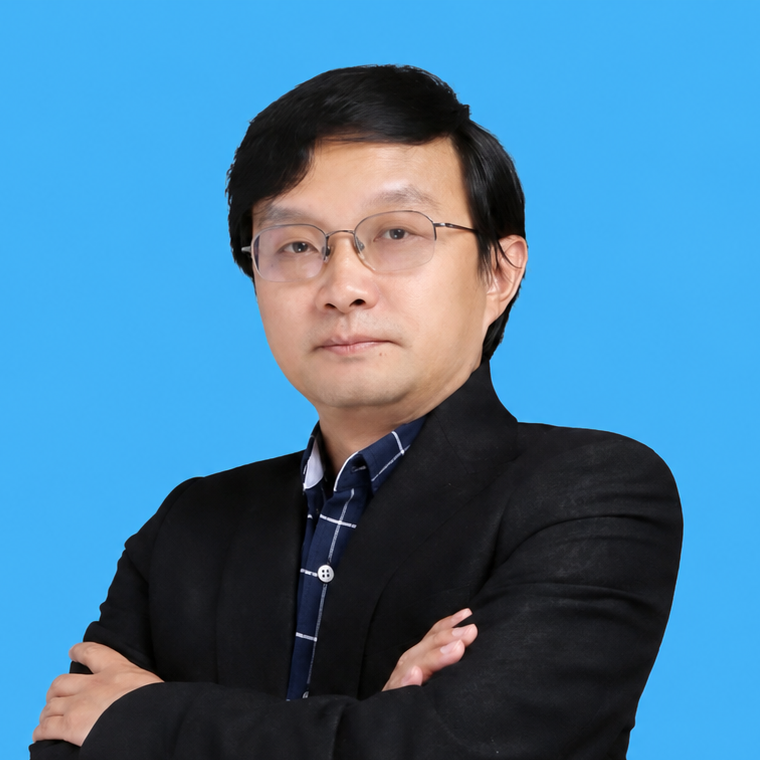
Changming DONG
Nanjing University of Information Science and Technology
Professor Changming Dong is a physical oceanographer whose research focuses on ocean multiscale dynamics, high-resolution ocean modeling, artificial intelligence oceanography, and experimental geophysical fluid dynamics. His work integrates theoretical analysis, numerical simulation, laboratory experiments, and AI-based approaches to advance the understanding and prediction of ocean processes. He has published more than 250 peer-reviewed papers and authored six academic books, reflecting his broad and sustained contributions to ocean sciences.
Professor Dong has made important contributions to the study of mesoscale eddies, submesoscale processes, and their roles in ocean transport, mixing, and energy transfer. His research has advanced the understanding of coherent ocean structures and their influences on the transport of heat, salt, and tracers across the global ocean. He developed an eddy detection scheme based on vector geometry that has been widely adopted in studies of mesoscale eddies and contributed to the quantification of eddy-induced transport processes in the global ocean. His studies on eddy-induced submesoscale dynamics and vertical heat transport have further improved understanding of multiscale ocean interactions and provided scientific support for improving parameterizations in eddy-resolving ocean models.
Professor Dong has also played a leading role in the development of high-resolution ocean numerical models and parameterization schemes for unresolved physical processes. He developed multiple sub-grid parameterization schemes that have been incorporated into global and regional ocean modeling systems, contributing to improved representation of small-scale physical processes and enhanced predictive capability of high-resolution ocean models. His research has also advanced the numerical modeling and forecasting of coastal ocean dynamics, with applications to marine hazard forecasting.
Professor Dong has contributed significantly to experimental geophysical fluid dynamics by establishing the world’s largest rotating water tank of its kind, with an inner diameter of 14 meters. The facility is dedicated to the study of rotating stratified turbulence and multiscale ocean dynamics, particularly fundamental physical processes that are difficult to observe directly in the ocean. This platform has strengthened the integration of theoretical studies, numerical simulations, and laboratory experiments in physical oceanography, creating new opportunities for laboratory-based studies of ocean circulation and mixing.
In artificial intelligence oceanography, Professor Dong has been one of the leading advocates for the development of this emerging interdisciplinary field. He has promoted the integration of machine learning and physics-based approaches for ocean prediction, parameterization, feature recognition, and dynamical diagnosis. He initiated the establishment of the AI Oceanography Committee under the Chinese Society of Oceanography and has actively advanced the development of AI oceanography through research, education, and international collaboration.
Within the Asia-Oceania region, Professor Dong has made distinguished contributions through scientific leadership and international collaboration in the Asia Oceania Geosciences Society. As a former chair and long-term leader of the Ocean Sciences Section, he actively promoted scientific exchange and collaboration across the region and was among the early advocates for incorporating artificial intelligence topics into regional geoscience meetings. Through sustained efforts in community building, interdisciplinary collaboration, and international academic exchange, he has contributed significantly to advancing ocean sciences and strengthening regional cooperation within the Asia-Oceania scientific community.