
AOGS Fellows
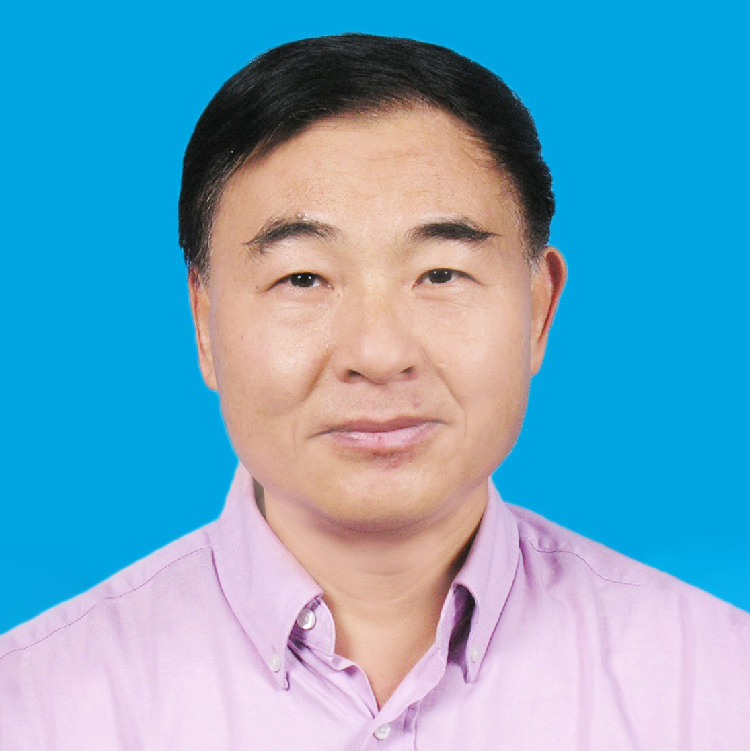
Yuqing WANG
University of Hawai‘i
Professor Yuqing Wang, of the International Pacific Research Center and the Department of Atmospheric Sciences, School of Ocean and Earth Science and Technology, University of Hawai‘i at Mānoa, is a world-leading tropical meteorologist whose pioneering research has profoundly advanced understanding of tropical cyclone dynamics, prediction, and climate impacts.
Professor Wang’s landmark contributions include the discovery of convectively coupled vortex Rossby waves and the clarification of their roles in polygonal eyewall structures, eyewall breakdown, and tropical cyclone intensity change. He has made fundamental advances in understanding spiral rainband dynamics, rapid filamentation, and the control of storm structure and intensity by surface enthalpy fluxes. He has also developed energetically and dynamically based time-dependent theories of tropical cyclone intensification, providing a quantitative framework that captures the observed dependence of intensification rate on storm intensity. These theories have been widely used to interpret environmental influences on tropical cyclones, explain long-term variability, and improve physical understanding relevant to tropical cyclone intensity forecasting.
Professor Wang has also made major contributions to numerical atmospheric modeling. He developed a modified Tiedtke cumulus parameterization scheme and an E–ε boundary layer parameterization scheme, both of which have been incorporated into the community Weather Research and Forecasting model and widely adopted by the research and forecasting communities, as well as in NCAR’s Model for Prediction Across Scales. His earlier triply nested tropical cyclone model, TCM3, and its nonhydrostatic successor, TCM4, remain landmark modeling frameworks for investigating tropical cyclone structure and intensity evolution. Beyond storm-scale research, his group has advanced regional and global climate modeling, cloud–radiation interaction studies, and dynamical downscaling for Pacific island climates, producing influential assessments of the impacts of global warming on tropical cyclone activity in the western North Pacific.
As a long-time co-convener of AOGS’s annual tropical-cyclone session, Professor Wang has played a major role in fostering scientific exchange and collaboration among researchers across Japan, Taiwan, Mainland China, Korea, Southeast Asia, and the broader Asia–Oceania region. Through his sustained originality, scientific leadership, and dedicated mentorship, Professor Yuqing Wang has made exceptional contributions to tropical meteorology and atmospheric sciences, with lasting influence across the Asia–Oceania region and beyond.